


BBC Panorama - The Poison in Your Mouth
BBC Panorama - The Poison in Your Mouth

Aired July 11, 1994
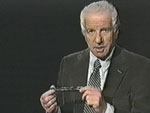 TOM MAN-GOLD (BBC): This is a phial of mercury, a liquid metal and one of the most poisonous substances known to man. Most people have metal or amalgam fillings in their mouth and half the metal in each filling is made from this stuff. For years dentists have believed that these fillings were safe, but now we know that everytime we chew, brush, or grind our teeth, some of the mercury is released as a vapor and we inhale it.
Panorama has uncovered a growing body of scientific evidence which shows ominous links between the mercury from our fillings and serious illnesses. We also reveal an uncomfortable background of complacency and ignorance within the British Dental establishment and apathy in government which is helping mask the truth about the dangers of the poison in your mouth.
(Vision shows men wearing protective suits)
 These men are handling old amalgam tooth fillings for recycling. Once removed, what had lived inside our mouths for years is suddenly treated as the dangerous poison it's always been. Mercury is so toxic that at certain levels it drives people mad. But even the tiniest amounts are regarded as unsafe.
At lower levels - no one quite knows how low they are - the metal attacks the brain and the central nervous system producing symptoms which include nervousness and irritability, lack of concentration, loss of memory and self-confidence, mood swings, anxiety, depression, fatigue and insomnia.
Because there can be other causes for these symptoms, no one has associated dental amalgam with them. But suddenly the familiar quicksilver of our youth is beginning to look dirty.
(Vision cuts to interview extracts)
 Dr. BOYD HALEY (University of Kentucky): If you have something that's been put in your mouth that you can't dispose of in a waste basket without breaking environmental protection laws, there's no point in keeping it around. There's no point in taking that type of risk. There's no point in exposing people to any level of mercury toxicity if you don't have to.
 JOHN HUNT (Chief Executive, British Dental Association): The epidemiological evidence thus far and every other bit of evidence that we've seen, not just ourselves but the scientific experts and the toxicologists, points to amalgam as being as safe as any other material.
 Dr. MURRAY VIMY (University of Calgary): Mercury is a poison; there's no safe level. The World Health Organization has determined that. And so how can we continue to implant that into people's teeth?
MANGOLD (BBC): Dentists have been using amalgam for over a century, convinced of its safety. The mercury is used to bond silver and other metals together to make a cheap, efficient, and durable filling. Yet no one has proved that when the mercury goes into our bodies that it is safe. The dentists have always assumed it was safe because there were no identifiable side effects. But dentists may not have been the right people to look for the subtle but dangerous symptoms of low level mercury poisoning. Supposing there have been side effects but of the kind that only doctors are qualified to recognize. Has the evidence always been there?
Tonight we examine the new scientific clues that place amalgam firmly in the dock, on suspicion of causing harm to humans. It's a case where both sides - believers and non-believers - are fundamentally divided on even the most basic issues.
Amalgam's most vehement support comes from the British Dental Association, the professional body to which most dentists belong. They run a service which includes giving their members an up to date advisory service. John Hunt is the Chief Executive and Peter Gordon the Scientific Advisor. They do no original work but review others' studies.
(Vision cuts to interview extract)
 TOM MANGOLD (BBC): Is amalgam safe?
PETER GORDON (Science Adviser, BDA): In a word, yes.
MANGOLD (BBC): No doubt about that at all?
GORDON: No doubt about it at all.
MANGOLD (BBC): Is there anybody it's not safe for?
GORDON: There may be a small percentage of the population with an allergy to amalgam, but it really is very, very small. In fact, less than 50 worldwide in the last hundred years.
MANGOLD (BBC): So it must be 99.9% safe?
GORDON: Yes, in our opinion.
(Vision cuts away from interview)
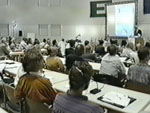 VOICE OVER: Dr. Lars Friberg spoke recently at a German amalgam conference. He's the world's leading authority on mercury poisoning and was chief advisor to the World Health Organization on mercury safety. Until now he has remained studiously neutral in the mercury debate.
(Vision cuts to interview extract)
MANGOLD (BBC): Dr Friberg, is there a safe level of mercury?
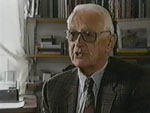 Dr. LARS FRIBERG (Consultant, World Health Organization): No, there is no safe level of mercury. And no one has actually shown that there is a safe level of mercury. And, I would say, mercury is a very toxic substance.
MANGOLD (BBC): So there's no amount, in your opinion, that should really go into the body?
FRIBERG: I would like to avoid it as far as possible.
MANGOLD (BBC): If there is no safe level of mercury, why does the British Dental Association say there is one?
FRIBERG: I don't know but I think they are wrong.
(Vision cuts away from interview)
VOICE OVER: The first evidence of mercury's journey into the body, came ten years ago. Dentists had always assumed that mercury stayed inert in the filling. But scientists discovered that the gleaming new amalgam inside a polished tooth didn't stay put. It leaked as mercury vapor and entered the blood stream.
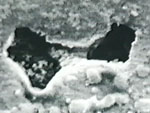 This is an electrical microscope picture of a ten year old amalgam filling. Those black holes are where the mercury used to be. In this filling, some 40 percent has evaporated in only ten years. But where did it go and could it cause harm to humans?
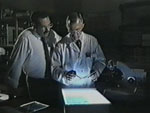 The challenge was taken up here in western Canada by two men from different disciplines. Their co-oporation has produced scientific revelations which are so damning that they may yet bring about the end of the very use of dental amalgam. Fritz Lorscheider and Murray Vimy set about clearing the smoke surrounding the amalgam mystery. Vimy, the academic dentist and World Health Organization consultant, and Lorscheider, Professor of Medical Physiology at the University of Calgary, pioneered a simple yet dramatic experiment to show not only where the missing mercury went but also that it did do harm when it got there. Their work shattered the comfortable illusion that mercury in amalgams was stable and safe. They took a sheep and put fillings in it's teeth containing radioactive mercury which would show up as black on X-rays.
(Vision cuts to footage of Dr Vimy looking at an x-ray)
 Dr MURRAY VIMY: Here's the outline of the sheep, going all the way around, and this is the jawbone of the sheep. Here are the two stomachs. This area is the liver. And here are the two kidneys. And this is the transverse colon. So the mercury from the fillings, which was slightly radioactive, migrated to these tissues. In fact, it was in all the tissues. Now the dental profession said that well it's a sheep, it chews too much, they grind a lot, they regurgitate their food, it's not a good example.
VOICE OVER: So they repeated the work with monkeys and found again the mercury had spread. Furthermore, they discovered that even small amounts of mercury from amalgams damaged the kidneys of the sheep.
(Vision cuts to interview extract)
MANGOLD (BBC): When you look at all the current scientific evidence, what do you think it's trying to tell you?
VIMY: It tells me very succinctly that there is a chronic low dose exposure to a toxic heavy metal, that 80 to 85% of the industrialized world has this metal implanted in their teeth, and it's a situation of timed release poisoning.
(Vision cuts away from interview extract)
 MANGOLD (BBC): But animal studies were one thing. What science now had to prove was that mercury from fillings in human beings was a major source of the body's intake of the metal, and that this mercury not only accumulated but stayed inside the body's most sensitive organs.
Well, they cracked that one here at the University of Arizona.
The University's Department of Molecular and Cellular Biology is headed by the world-renowned Professor Vasken Aposhian. He used these tablets to draw out mercury in the body's sensitive organs. Students volunteered to take part.
For over a century, dentists believed that mercury from fillings didn't even enter the body. But Aposhian's results published two years ago were an astonishing rebuttal. They showed that no less than two-thirds of the mercury in the body came from tooth fillings.
(Vision cuts to interview extract)
 Dr. VASKEN APOSHIAN (University of Arizona): I'm worried that the amount of mercury coming from dental amalgams that we're putting in the mouths of young children today, might be harmful to them as far as affecting their learning abilities, their performance abilities, and I would hate to think that twenty years from now we will have hurt some of these children when we could have prevented it by proper scientific research and that is what we must do now.
VOICE OVER: The professor simply doesn't know if enough mercury from fillings enters the body to do harm, but nor is he waiting to find out.
APOSHIAN: I'd hate to see amalgams in the mouths of my grandchildren, who are 5 years and 8 years of age now, when there are better materials, and I think there are better materials, now available.
MANGOLD (BBC): And safer?
APOSHIAN: And safer.
(Vision cuts to BDA interview)
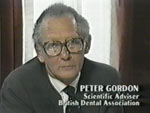 MANGOLD (BBC): Are you aware of the work of Professor Aposhian, professor of Molecular and Cellular Biology at the University of Arizona?
PETER GORDON (Science Advisor, British Dental Association): No.
MANGOLD (BBC): Not at all?
GORDON: (Shakes head)
MANGOLD (BBC): Did you know that he has shown that two-thirds of the mercury excreted from the human body comes from dental amalgams?
JOHN HUNT (Chief Executive, British Dental Association): No, I didn't know that.
MANGOLD (BBC): Isn't this, gentleman, a kind of document that ought to be on your desks?
HUNT: Yes, I'm surprised it isn't in the bundle that we have got, but nevertheless I think that if it were, and if you'd produced it, we would have had a look at it and asked our experts to have a look at it, and review the scientific methodology and the interpretation of the findings. We need to have a look at these papers and certainly, routinely, we do. This one we appeared to have missed.
(Vision cuts away from interview)
 MANGOLD (BBC): Now, even more ominous evidence has been uncovered. This time about the dangers of amalgam's mercury in the most vulnerable and sensitive organ of all.
It was a dentist in Los Angeles who first discovered from his examination of bodies here in the mortuary that mercury from dental amalgam travels to the brain, and the more fillings the more it accumulates.
Dr. David Eggleston is a dentist in California. His clients include Tom Cruise. His less glamorous work recently took him to the county morgue to investigate the relationship between dental mercury and the brains of the dead. Eggleston spent months studying the records and discovered that mercury from amalgams not only accumulates in the brain, but that some of this poison stays in the skull for as long as 40 years.
(Vision cuts to new interview extract)
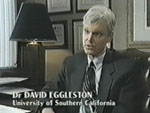 Dr. DAVID EGGLESTON (University of Southern California): I think there is legitimate concern regarding the mercury issue in dentistry. Mercury does release from the silver fillings, it does accumulate in the body.
MANGOLD (BBC): Do you insert mercury amalgam in this practice here?
EGGLESTON: No, I do not.
MANGOLD (BBC): For the reasons you've just given?
EGGLESTON: Yes for the mercury issue, yes.
MANGOLD (BBC): And have you had your fillings, your amalgam fillings removed?
EGGLESTON: Yes, I have.
MANGOLD (BBC): Again, for the same reason?
EGGLESTON: For concern with mercury yes.
(Vision cuts away from interview)
 MANGOLD (BBC): So if dental mercury enters and stays in the brain for most of our lives then what evidence is there that it produces long term damage?
Testing humans for mercury damage over a lifetime would be a notoriously difficult and expensive study. No one's ever tried it. But suddenly researchers are on the verge of a breakthrough.
These are the dental records of scores of elderly nuns in a convent in Wisconsin. They may hide part of the answer to one of amalgam's greatest riddles - is there a link between the mercury in fillings and the deadly disease of alzheimers? A unique study starting with these files may provide the clues.
 These spritely ladies have made it into a fulfilling old age. They've agreed to take part in a scientific gamble by donating their brains to medical researchers who will look for a positive relationship between dental amalgams and alzheimers disease.
Already some scientists are reaching provisional conclusions about the dangers of dental amalgams.
(Vision cuts to new interview extract)
 MANGOLD (BBC): Is there any doubt in your mind about the association between mercury and alzheimers?
Dr. BOYD HALEY (University of Kentucky): I would not want to make a statement that mercury causes alzheimers disease but there is no doubt in my mind that low levels of mercury, present in the brain, could cause neuronal cell death and this could lead to dementia, which would be similar to alzheimers disease.
VOICE OVER: Dr Boyd Haley, professor of medicinal and biochemistry, has just made a dramatic breakthrough while investigating the implication of dental amalgam with alzheimers. He has discovered that even tiny quantities of the metal can produce changes in the brain that are identical to changes caused by the disease. Specifically the mercury inhibits the efficiency of tubulin, a protein essential to brain cells.
HALEY: We can't go inside a living human being and look at their brains so we have to work outside and do scientific experiments such as we've done. And through the best that we can determine with these experiments, mercury is a time-bomb in the brain waiting to have an effect. If it's not bothering someone when they're young, especially when they age it could turn into something quite disastrous.
MANGOLD (BBC): So, in a worst case scenario, what happens to the human being?
HALEY: You would become demented.
VOICE OVER: Although Dr. Haley knows there is still no proof of damage, he for one has heard enough.
MANGOLD (BBC): What did you do about your own fillings?
HALEY: I still have one amalgam filling. But, when I have them replaced, I have them replaced with non-amalgam material.
MANGOLD (BBC): Why?
HALEY: Because I'm afraid enough of my own research, and concerned enough, that I don't want it in my mouth, nor do I want it in the mouth of my children, or my wife.
(Vision cuts to BDA interview extract)
MANGOLD (BBC): Are you aware of the association between dental mercury and alzheimers?
PETER GORDON (Science Advisor, British Dental Association): As far as I know, there is no association with mercury and alzheimers.
MANGOLD (BBC): Are you aware of a paper by Dr. Boyd Haley of the University of Kentucky?
GORDON: By name, no.
MANGOLD (BBC): Gentleman, this was published in 1993. Isn't this a document that should be on your desk?
JOHN HUNT (Chief Executive, British Dental Association): I come back to the point that we rely on expert advice.
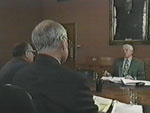 MANGOLD (BBC): But, what kind of advice are you getting if these papers are not being put on your desk so that you can inform your dentists and members of the public?
HUNT: Well, we look to a group of people, including our consultants, but also we rely upon the Department of Health and other bodies to let us have their results and their advice about results that they would have read in papers.
MANGOLD (BBC): These are key papers Mr Hunt. These are very important papers, aren't they? I mean the relationship between dental mercury and alzheimers is not an unserious matter.
HUNT: No, and we shall certainly look at that paper.
(Vision cuts away from interview)
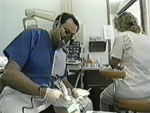 VOICE OVER: The few dentists who have read the new data now refuse to handle amalgam at all. The majority who do are warned by their dental associations to deal with it with considerable caution and respect. Some even treat it like a journey to a hostile planet. But given their occupational exposure to dental amalgam, they are taking sensible precaution.
But are all these precautions enough to protect the dentists and their assistants from the mercury vapor that they'll encounter in the workplace?
One long established and apparent fact has always consoled dentists who work with amalgam. If it doesn't hurt us, they argue, how could it harm you the patient?
But in a dramatic new study to be published shortly, even that comforting truth is now revealed as yet another illusion.
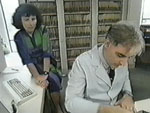 A dentist is tested for his speed of action and reaction as part of a complex assessment of his central nervous system. Dr Diane Echeverria, a neurotoxicologist, has just completed a remarkable study. She tested American dentists to see whether they have the subtle, but dangerous, symptoms of mercury poisoning.
(Vision cuts to interview)
Dr. DIANA ECHEVERRIA (University of Washington): Well the kinds of things that we have found are losses in function associated with the ability to move manually very small things with your hands. A manual dexterity problem. Other kinds of really distinct functions are concentration, the inability to concentrate. Actually those are skills that anybody needs.
(Vision cuts to other interview)
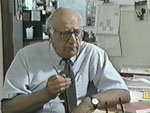 Dr. VASKEN APOSHIAN (University of Arizona): If I were to time how fast you could put this pen into these holes, or similar tasks, that in normal people might take one second to find the right hole and very quickly make the connections, a person with a deficit would take more time, maybe 2 or maybe even 5 seconds. And so, in the studies that Diana did, she was measuring in milliseconds which is an even more careful approximation of the times.
MANGOLD (BBC): What are the implications?
APOSHIAN: The implications are that in the dental technicians the mercury has caused very definite central nervous system disorders.
(Vision cuts away from interview)
VOICE OVER: No one has ever tested human beings who have such a low level of mercury before. Dentists will be alarmed to learn that some of their physical functions and emotions are already being injured by exposure to such small levels of mercury vapor. It's only a question of time and research funds before similar tests are conducted on patients.
And to add to the discomforting news, the difference in body mercury levels between dentists and patients is already too close for comfort.
(Vision cuts to interview)
Also make sure to read these books: Poison in Your Teeth: Mercury Amalgam (Silver) Fillings...Hazardous to Your Health! and Mercury Detoxification by Tom McGuire
Continue to:


My Books

