


Toxic Teeth: The Chronic Mercury Poisoning Of Modern Man
Toxic Teeth: The Chronic Mercury Poisoning Of Modern Man
By Murray J. Vimy. (Extracted from his web page)
[Dr. Vimy has published a number of peer reviewed medical research papers and has presented lectures on his research internationally at universities and professional symposia. He has also acted as a scientific consultant to the World Health Organization as a member of the 1989 Task Group on Inorganic Mercury in the Environment and to Health and Welfare Canada. Dr. Vimy continues to maintain an active research program with a primary focus on the release, metabolism and pathophysiological effects of mercury released from dental amalgam tooth fillings. He also teaches Oral Biology and Dental Medicine at the University of Calgary Medical School, where since 1984 he has been the principal dental instructor appointed to the undergraduate medical curriculum.]
Are mercury-based fillings slowly poisoning their owners? Evidence suggests that, far from being the best material to use in the mouth, these fillings should be banned.
The issue of mercury exposure from dental "silver" fillings has gained considerable notoriety in general media during the last decade. Specific attention has focused on the potential for human health consequences and the general well-being of the global environment. The modern silver amalgam (amalgam meaning mixed with mercury), traditionally known as a "silver" filling, has been employed as the principal tooth restorative material for over 180 years and presently accounts for 75-80% of all tooth restorations.[1] These "silver" fillings contain approximately 50% mercury by weight, 35% silver, 13% tin, 2% copper and a trace of zinc.[2] Each tooth restoration has a mercury mass of about 750-1000 mg and should more properly be called a mercury filling. They have a functional life of approximately 7-9 years, after which they are usually replaced with another mercury filling.[3,4] Hundreds of metric tonnes of mercury are placed into teeth world wide each year and some of this material, as particulate waste from the dental office, finds its way into the sewerage and refuse systems.
Within the dental profession, the issue of mercury filling safety has cyclically recurred. After the introduction of the modern dental amalgam in 1812 by a British chemist, a "silver paste", which a combination of silver filings from coins and mercury, became fashionable for tooth restoration. Since the coins were not pure, expansion of the material often resulted in tooth fracture and/or a "high bite". In America during the 1800s, concern regarding the possibility for mercury toxicity caused the American Society of Dental Surgeons to make mercury usage an issue of malpractice, mandating that its members sign an oath not to use mercury-containing materials. However, mercury fillings usage increased because it afforded an economic advantage to those dentists employing it; it is user friendly; and because of its durability in the mouth. By 1856, the American Society of Dental Surgeons was forced to disband due to dwindling membership over the mercury filling issue. In its place arose the American Dental Association, founded by those who advocated silver amalgam - mercury use in dentistry.[5-7] Again in the 1920s, a controversy erupted after the publication of articles and letters by a German chemistry professor, who attacked mercury filling usage for possible toxic effects.[8-13] That debate abated and the dental profession's opinion still remains unchanged. 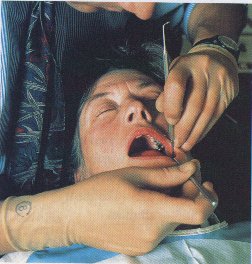
Today, 182 years later, the American Dental Association has amended its Code of Ethics to make the removal of serviceable mercury fillings an issue of unethical conduct, if the reason for removal is to eliminate a toxic material from the human body and if this recommendation is made solely by the dentist.[14] In the American Dental Association's view, a dentist is "ethical" to place the mercury material and recommend its safety. But, if the dentist suggests that the mercury fillings are potentially harmful or that exposure to unnecessary mercury can result, then the dentist is acting "unethically". Clinically serviceable mercury fillings can be "ethically" removed if: done for aesthetic reasons; the request of a physician; or at the patient's request (without prompting). ***
Release of mercury from dental fillings. Mercury vaporizes continuously from dental fillings, being intensified by chewing,[15,16] tooth brushing [17] and hot liquids.[18] After mastication or tooth brushing ceases, it takes almost 90 minutes for the rate of vaporization to decline to the lower prechewing level (Fig. 1).16 Also, the greater the number of fillings and the larger the chewing surface area, the larger the mercury exposure.[15,16] Thus, the average individual is on a roller coaster of mercury vapor exposure during the day. Breakfast will cause the release rate to increase and just as the rate is slowing again it is time for the midmorning coffee break. Lunch, mid-afternoon coffee or tea, the evening meal, and a snack before bedtime all contribute to the daily exposure to mercury from dental fillings.
It is estimated that the average individual, with eight biting-surface mercury fillings, is exposed to a daily dose uptake of approximately 10 micrograms mercury per day from dental fillings.[19] Select individuals may have daily doses 10 times higher (100 micrograms per day) because of which exacerbate the mercury vaporization. Some of these factors are: frequency of eating, chronic gum chewing, chronic tooth grinding behaviour (usually during sleep), the chewing pattern of the individual, consumption of hot foods and drinks, mouth and food acidity.[16] Corroborating human autopsy evidence [20-22] showed that brain and kidney tissues contained significantly higher mercury in individuals who had mercury fillings. Furthermore, the concentration of brain mercury in the subjects with mercury fillings correlated with the number of these fillings present.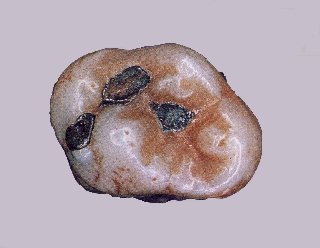
The historically espoused opinion of dentistry insists that, once mixed, the mercury is locked into the fillings.[23] The aforementioned body of experimental evidence suggests that their opinion is totally without merit. Despite these replicated research findings, many national dental associations still claim that mercury fillings are safe.[24] They base their conviction on the anecdotal facts that mercury fillings have been used for over 150 years, billions of fillings have been placed, and they do not see sickness or death from the mercury exposure.[25] But, the diagnosis of mercury toxicity lies outside the purview of dentistry, falling more appropriately within the jurisdiction of medicine. Dental institutions do not have the scientific expertise or the resources to undertake the necessary studies to scientifically resolve this issue. Thus, the issue of mercury filling safety has not been suitably addressed until recently, when academic medicine became aware of this insidious exposure to mercury. From the medical perspective, dental amalgam fillings are a significant mercury source, having potential medical consequences.
Also make sure to read these books: Poison in Your Teeth: Mercury Amalgam (Silver) Fillings...Hazardous to Your Health! and Mercury Detoxification by Tom McGuire
Continue to:


My Books

